History ·
Paris, October 1974: The 911 Turbo Arrives
Porsche showed the production 911 Turbo at the Paris Motor Show on 3 October 1974. How a racing idea became the 930, and what it means for today's cars.
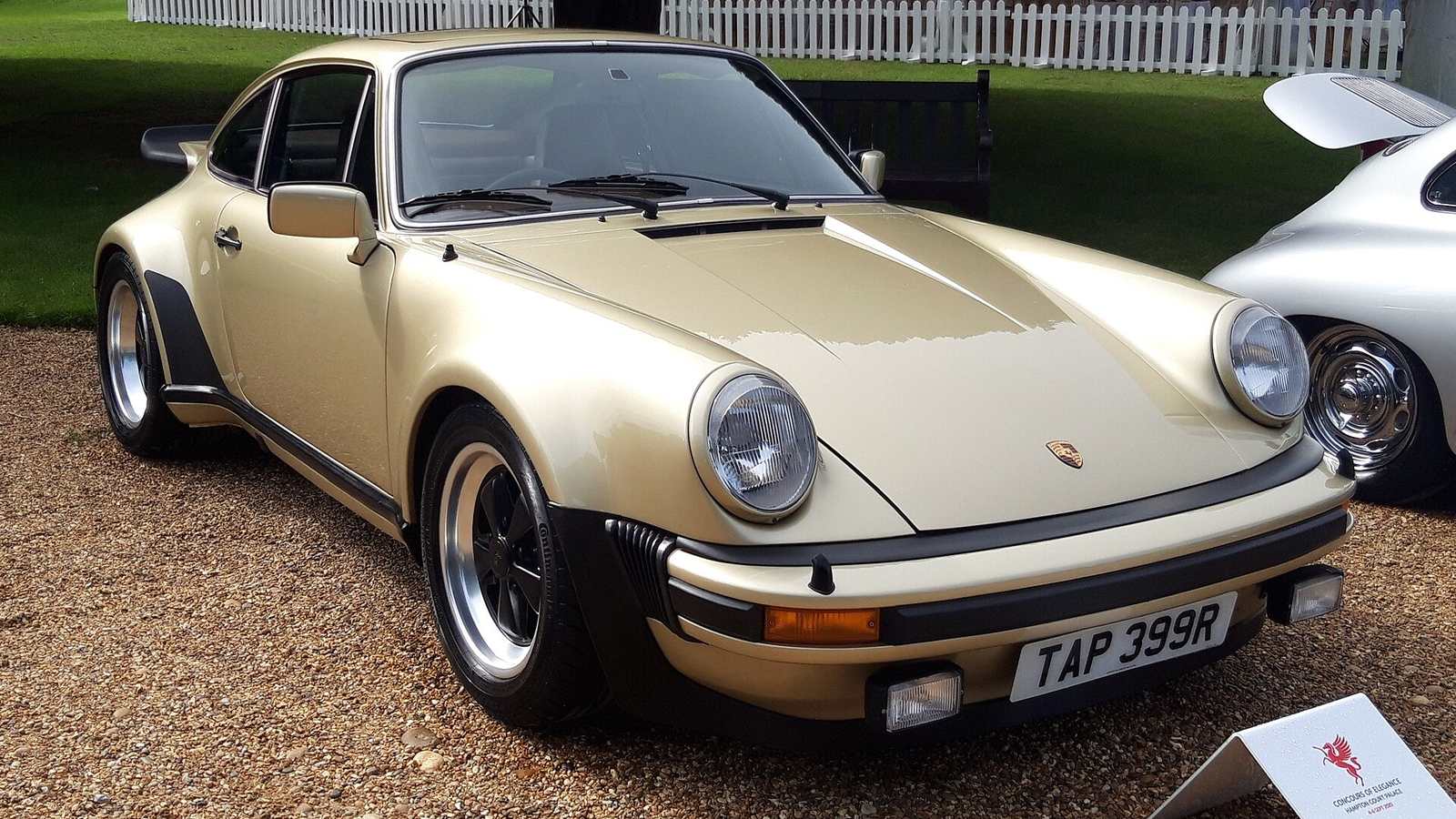

Fifty-two years ago this month, on 3 October 1974, Porsche put the production 911 Turbo on its stand at the Paris Motor Show. Every turbocharged 911 since traces back to that car.
From the racetrack
Porsche learned turbocharging in racing. The 917/10 won the Can-Am championship in North America in 1972, and the 917/30 that followed in 1973 was so dominant in Mark Donohue’s hands that the rules were rewritten. In 1974 the works applied the same thinking to the 911: a Carrera RSR Turbo 2.1 finished second overall at Le Mans, among purpose-built prototypes.
A road car was already on the way. A silver 911 Turbo concept had appeared at the Frankfurt show on 13 September 1973, with the word Turbo written across its rear wings.
Number one
The first road-going 911 Turbo was not for sale. On 29 August 1974 Ferry Porsche gave it to his sister, Louise Piëch, for her 70th birthday. According to Porsche it had a turbocharged test version of the 2.7-litre engine in a narrow body, and the badge on the tail read Carrera, not Turbo.
The Paris car
Five weeks later came the real thing. The Paris show car had a 3.0-litre flat-six with a single turbocharger and 260 PS, wide rear arches and a large rear wing. Inside it was fully trimmed, with leather and tartan seat centres. This was a deliberate choice: the Turbo was to be the flagship of the 911 range, a fast and comfortable road car, not a stripped homologation special.
Sales began in spring 1975. Inside the company the car was the Type 930, and Porsche describes it as the world’s first series-production sports car with an exhaust-gas-controlled turbocharger. It sold better than Porsche had expected.
What followed
In 1978 the engine grew to 3.3 litres, gained an intercooler and made 300 PS. The 930 stayed in production until 1989, with a four-speed gearbox until its final year. Early cars are known for the pause before the boost arrives and the shove when it does, which is part of their reputation and a reason to treat one with respect on a damp road.
Our classic 911 guide covers the 930 alongside the other G-series cars, and famous Porsche cars has the 917 and the 935, the racing car that the Turbo became.
Why it still matters
Most of the current 911 range is turbocharged, and so is every four-cylinder 718. One practical benefit shows up in the mountains. A naturally aspirated engine loses power steadily as the air thins, while a turbocharged one loses far less. On a high road such as the Million Dollar Highway in Colorado, or the passes of the Furka, Grimsel and Susten loop, that is easy to notice.
Sources: Porsche Newsroom, 50 Years of Porsche Turbo: The beginning of the series.