Tech ·
Brake Fluid Every Two Years: Why Time Matters More Than Miles
Porsche asks for new brake fluid every two years, whatever the mileage. Why fluid ages in a parked car, and what old fluid does on a long descent.
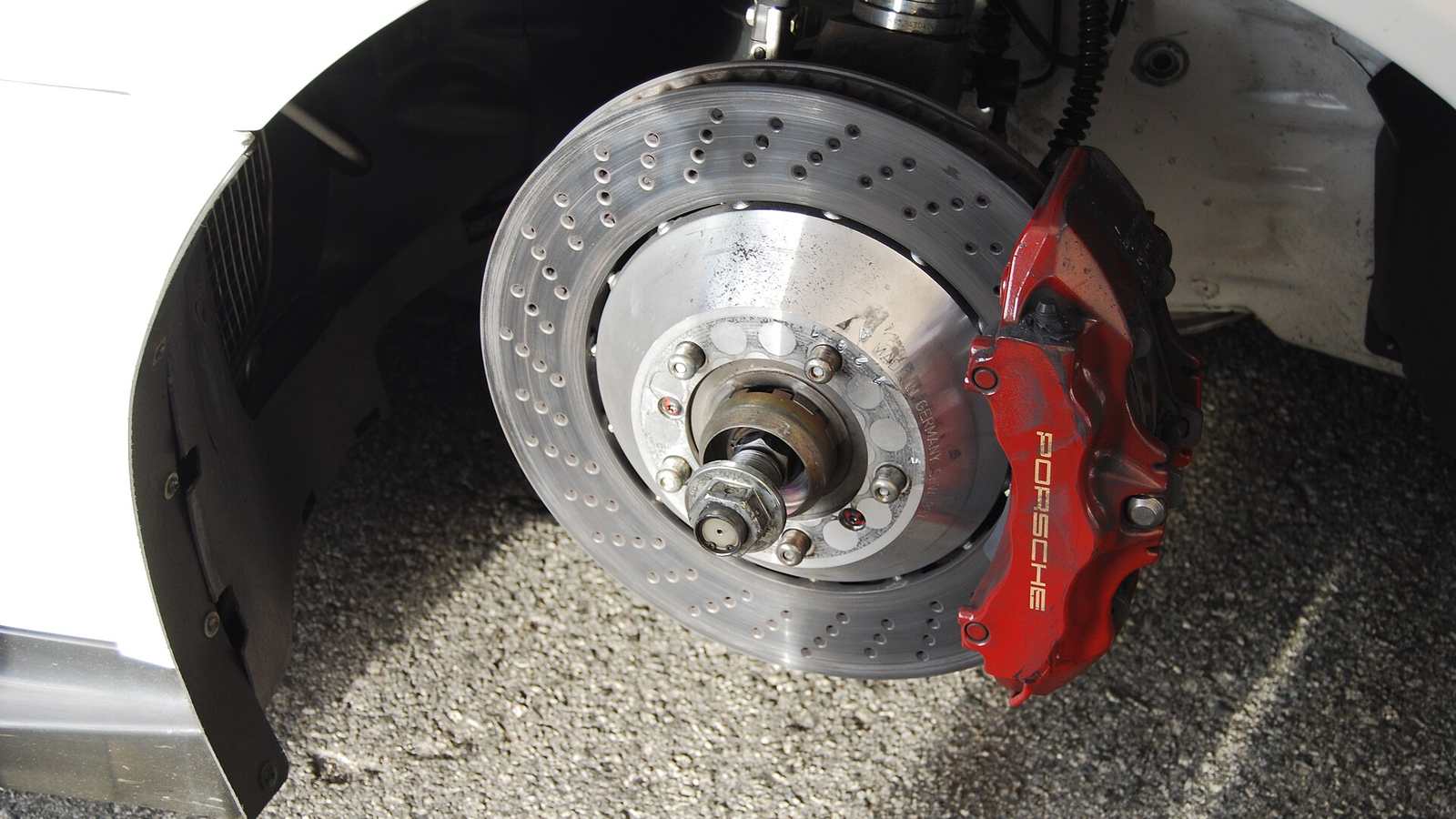

Most items on a Porsche service schedule are tied to distance. Brake fluid is the exception. Porsche dealer maintenance schedules list a brake fluid change every two years regardless of mileage, as Porsche Irvine’s schedule puts it. A car that covered 1,500 miles since its last change needs the same job as one that covered 20,000. With many cars now laid up for the winter, it is worth understanding why.
Brake fluid absorbs water
Porsche brake systems use a glycol-based fluid. Glycol fluids are hygroscopic: they take in moisture from the air. The system is sealed, but not perfectly. Water vapour passes slowly through the rubber hoses and seals, and the reservoir has to breathe as the fluid level falls with pad wear. None of this depends on driving. A car sitting in a garage through a damp winter keeps absorbing water.
The fluid does not separate the water out. It mixes in, which is why fluid can look clean in the reservoir and still be well past its best.
What water does to the boiling point
The US standard that defines DOT grades sets two minimum boiling points for each. For DOT 4, fresh “dry” fluid must boil no lower than 230°C. “Wet” fluid, tested with roughly 3.7 per cent water mixed in, must boil no lower than 155°C. That is a large drop for a small amount of water.
Under hard braking, heat flows from the pads into the calipers and then into the fluid. If the fluid boils, it forms vapour bubbles. Fluid cannot be compressed, but vapour can, so the pedal goes long and soft. The brakes have not failed mechanically, but they are no longer doing what your foot asks.
On a normal commute this rarely matters. It matters on a long Alpine descent such as the Stelvio Pass or the Grossglockner High Alpine Road, where the brakes get little time to cool. Using a lower gear to let the engine hold the car helps, but fresh fluid is the real safeguard.
Corrosion you cannot see
Water also corrodes. Brake fluid contains corrosion inhibitors, but they wear out. Old, wet fluid can attack caliper pistons and bores and the valves inside the ABS and stability control unit. Those parts cost far more than a fluid change.
What to do
- Follow the date, not the odometer. Check the service book. If there is no record of a fluid change in the last two years, do it.
- Before a track day, change it regardless. Many owners fit a higher-boiling fluid for track use. Our guide to track day modifications starts there for a reason.
- When buying a used car, look for the invoices. A fluid change is cheap and easy to skip, so its absence says something about how a car was kept. See our guide to buying a used 911 or Cayman.
- Use the fluid your manual specifies, and do not mix silicone-based DOT 5 with glycol fluids.
If your car is laid up now, booking the fluid change with its spring service means it starts next season’s mountain roads with fresh fluid.