Famous Porsche Cars: 550 Spyder, 917, 956, 959 and More
The racing and road cars that built the name, from a 550 kg Spyder to the 919 Hybrid.
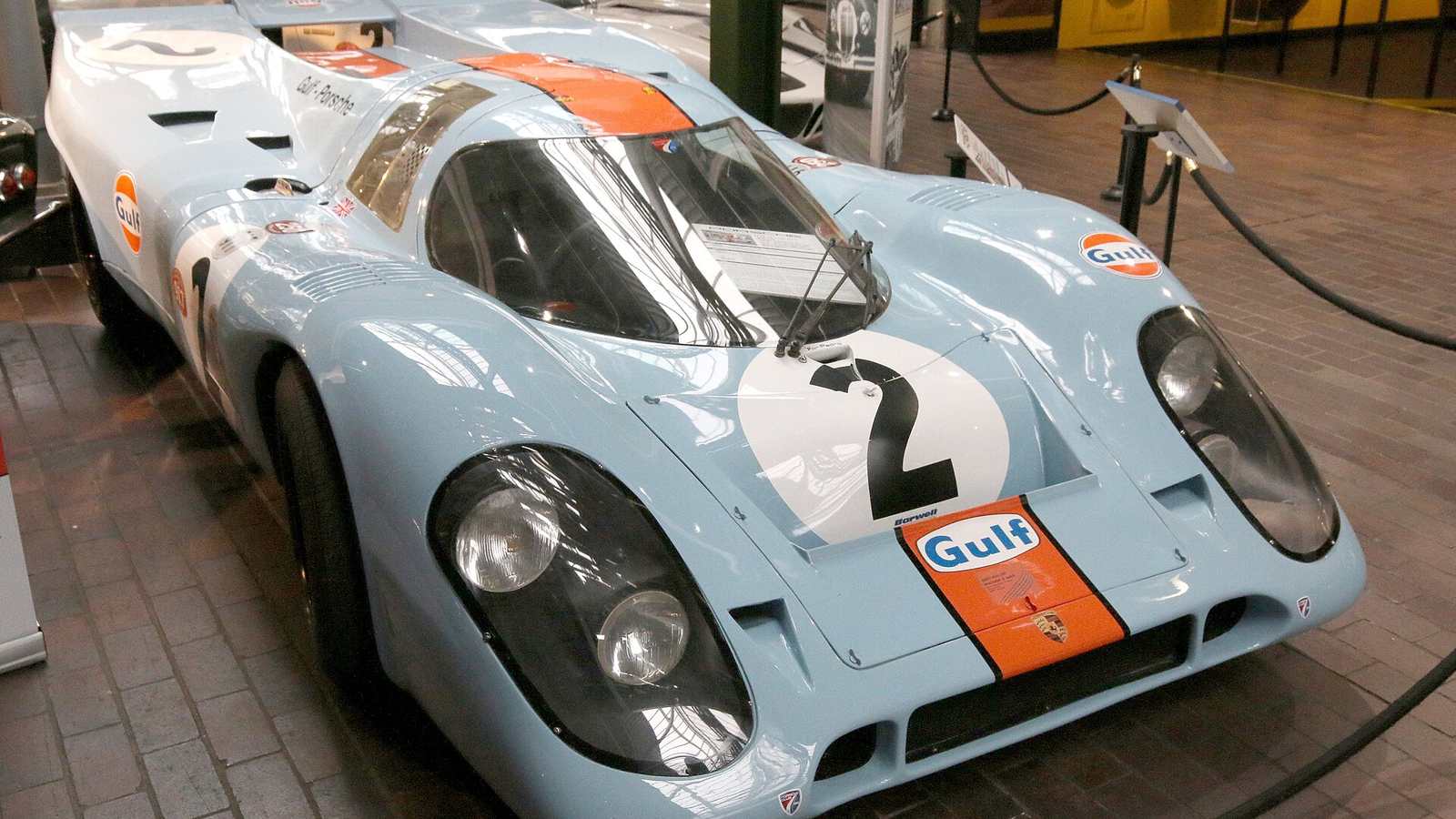

This is a short tour of the Porsches that mattered most, in roughly the order they appeared. The regular production cars have their own pages in the model guide.
550 Spyder (1953)
Porsche’s first purpose-built racing car: a small, low, mid-engined roadster with Ernst Fuhrmann’s four-cam flat-four. It won its class almost everywhere it went, including on the Carrera Panamericana, which gave Porsche the Carrera name. In 1956 a 550 A driven by Umberto Maglioli won the Targa Florio outright, Porsche’s first major overall victory. The actor James Dean died in a 550 in California in 1955.
718 RSK and 718 RS 60 (1957–1961)
The 550’s successors continued the giant-killing, with overall wins at the Targa Florio and at the Sebring 12 Hours in 1960. Their type number was revived for the current 718 Boxster and Cayman.
904 Carrera GTS (1964)
A glass-fibre-bodied, mid-engined coupé designed by Butzi Porsche and sold as a road-legal racing car. It won the Targa Florio in 1964 and finished second on the snowbound Monte Carlo Rally of 1965.
911 Carrera RS 2.7 (1972)
The homologation special that defined what a fast 911 should be: lighter panels, a 210 PS 2.7-litre engine and the ducktail spoiler. Its racing derivative, the Carrera RSR, won the Daytona 24 Hours and the last World Championship Targa Florio in 1973. See the classic 911 guide.
917 (1969)
The car that turned Porsche from a class winner into an outright winner. Ferdinand Piëch had 25 built to satisfy the homologation rules for 5-litre sports cars, and lined them up for the inspectors in the factory yard. With an air-cooled flat-twelve of 4.5 litres, later 5.0, it was at first frighteningly unstable, and was cured by a shortened, upswept tail. The 917 K won Le Mans in 1970 and 1971 and the World Championship for Makes in both years.
When the rules changed, Porsche took the car to the Can-Am series in North America and turbocharged it. The 917/30 of 1973, driven by Mark Donohue, produced well over 1,000 horsepower and was so dominant that the regulations were rewritten.
935 (1976)
A 911 Turbo turned into a silhouette racing car under the Group 5 rules. It won championships on both sides of the Atlantic for years, and a privately run Kremer 935 K3 won Le Mans outright in 1979. The long-tailed 935/78 was nicknamed Moby Dick.
936 (1976)
An open prototype with a turbocharged flat-six, built in tiny numbers. It won Le Mans in 1976, 1977 and 1981.
956 and 962 (1982)
Porsche’s Group C cars were its first with an aluminium monocoque and ground-effect aerodynamics. The 956 finished first, second and third at Le Mans on its debut there in 1982, and the 956 and 962 between them won the race every year from 1982 to 1987. Sold to private teams as well as run by the factory, they filled sports car grids for a decade. The PDK dual-clutch gearbox used in today’s road cars was first raced in a 962.
959 (1986)
Conceived for Group B and built as a technology showcase: a twin-turbocharged flat-six with 450 PS, electronically controlled four-wheel drive, adjustable ride height and composite body panels. It was the fastest production road car in the world when it appeared. Rally versions won the Paris to Dakar in 1986, and its four-wheel-drive system led to the 964 Carrera 4. Around 300 were made.
911 GT1 (1996)
A mid-engined racing car wearing 911 headlamps, with a small run of road-going versions built for homologation. The GT1-98 gave Porsche a one-two finish at Le Mans in 1998, 50 years after the first 356.
Carrera GT (2003) and 918 Spyder (2013)
The V10 Carrera GT and the hybrid 918 Spyder were the two flagship road cars of the modern era. Each has its own guide.
919 Hybrid (2014)
Porsche returned to the top class at Le Mans with a prototype powered by a turbocharged 2.0-litre V4 and two energy recovery systems. It won the race in 2015, 2016 and 2017 and the World Endurance Championship in each of those years. A derestricted version, the 919 Hybrid Evo, lapped the Nürburgring Nordschleife in 5 minutes 19.55 seconds in 2018.
963 (2023)
The current prototype, built to the LMDh rules. It has been raced by Porsche Penske Motorsport and by customer teams in the World Endurance Championship and in the IMSA series in North America, and has won the Daytona 24 Hours and titles in both.
Seeing them
The Porsche Museum in Zuffenhausen displays most of these cars, in rotation, and keeps many of them in running order. Rennsport Reunion, Le Mans Classic and the Goodwood Festival of Speed, all on the events page, are the places to hear them. For the people who drove them, see famous Porsche drivers.