History ·
Estoril, October 1984: Lauda's Half-Point Title With Porsche Power
On 21 October 1984 Niki Lauda won the Formula 1 title by half a point at Estoril, in a McLaren powered by a Porsche-designed V6 turbo. How it happened.
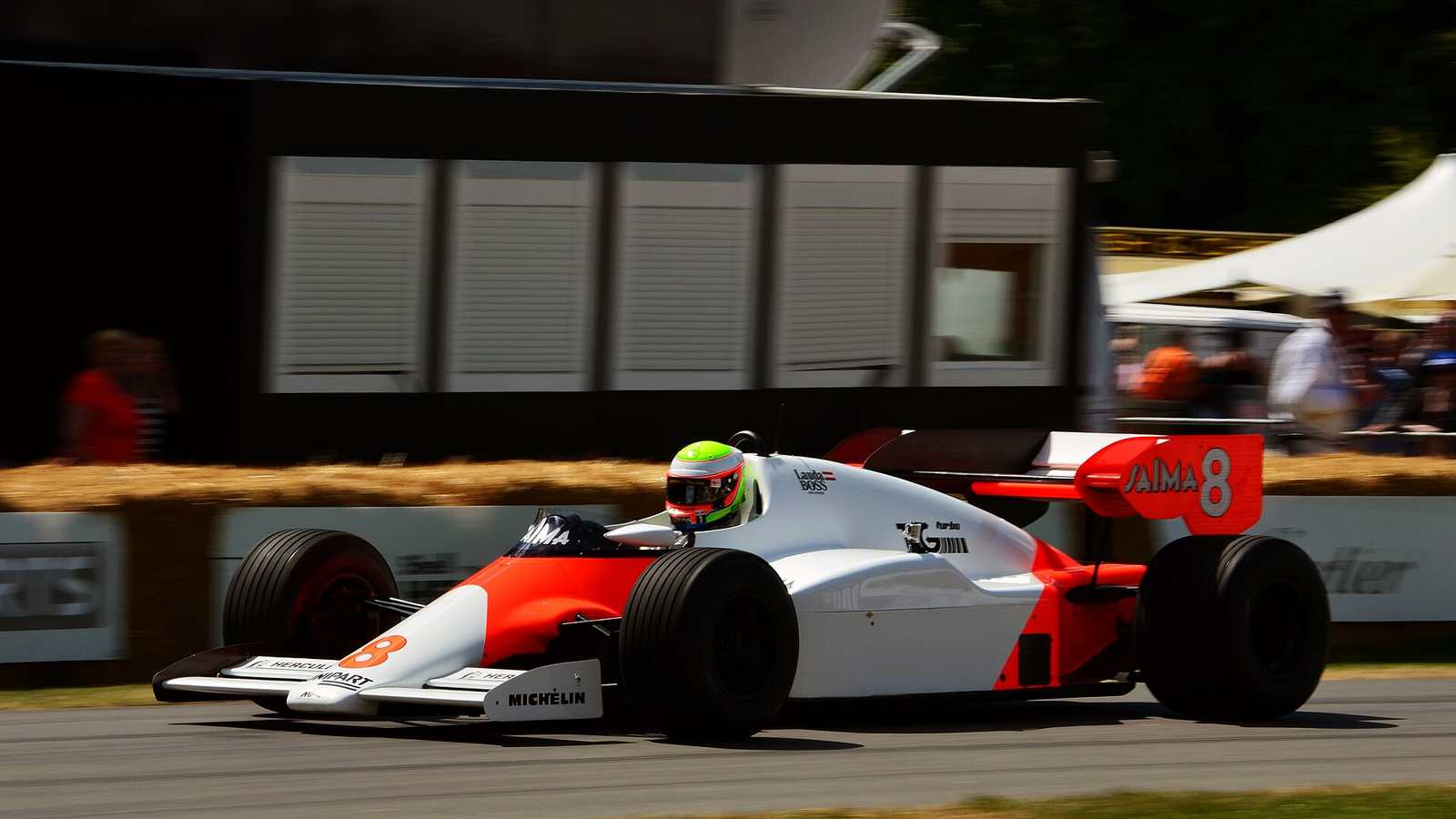

Porsche is best known for winning at Le Mans and on rally stages, not in Formula 1. Yet 42 years ago tomorrow, on 21 October 1984, a Porsche-designed engine decided the closest drivers’ championship the sport has ever had. Niki Lauda finished second at Estoril and took the title by half a point from his McLaren teammate, Alain Prost.
An engine built to order
In 1981 McLaren and the TAG (Techniques d’Avant-Garde) group commissioned Porsche to design a turbocharged Formula 1 engine. The work was led by Hans Mezger, then head of racing design at Weissach, the same engineer whose name is attached to the dry-sump flat-six in the 996 GT3 and Turbo.
The result was a compact 1.5-litre V6 twin-turbo, badged as a TAG Turbo but known inside Porsche as the Type 2623. It took about two years from order to racing. In the 1984 McLaren MP4/2 it gave roughly 750 PS, and it was known for its reliability and low fuel consumption at a time when races were run on a fixed fuel allowance.
The season
The McLaren-TAG pairing dominated 1984. Prost won seven races and Lauda five, so the title was always going to go to one of them. The half point came from Monaco in June, where the race was stopped in heavy rain after 31 laps and half points were awarded. Prost won that day and scored 4.5 instead of 9.
Going into the final round in Portugal, Lauda led Prost by 66 points to 62.5. If Prost won, Lauda needed to finish second.
The race at Estoril
Prost qualified second. Lauda had a poor session and started eleventh. Prost took the lead and stayed there, while Lauda worked his way forward through the field, held back early by a turbocharger problem that also left him unsure whether his fuel would last.
Late in the race Nigel Mansell, running second in his Lotus, retired with a brake failure. Lauda moved up to second behind Prost and held it to the flag. The final table read Lauda 72, Prost 71.5. It was Lauda’s third and last world title, and McLaren took the constructors’ championship with 143.5 points to Ferrari’s 57.5.
What followed
The Porsche engine went on to win Prost the drivers’ title in 1985 and 1986, and McLaren a second constructors’ title in 1985. In all, McLaren drivers won 25 Grands Prix with it between 1984 and 1987.
Porsche’s later Formula 1 work was much less happy, but the racing knowledge carried on in other ways: the V10 in the Carrera GT began life as a Formula 1 design study. For more on where the TAG years sit in the wider story, see our guide to Porsche history, and if you want to see an MP4/2 run, historic Formula 1 cars appear regularly at the Goodwood Festival of Speed and other shows on our events page.
Source: Christophorus, “Lap Time: Nail-Biter” and Christophorus, “Icon: Type 2623”.