Rear-engined 2+2 coupé, Targa and cabriolet
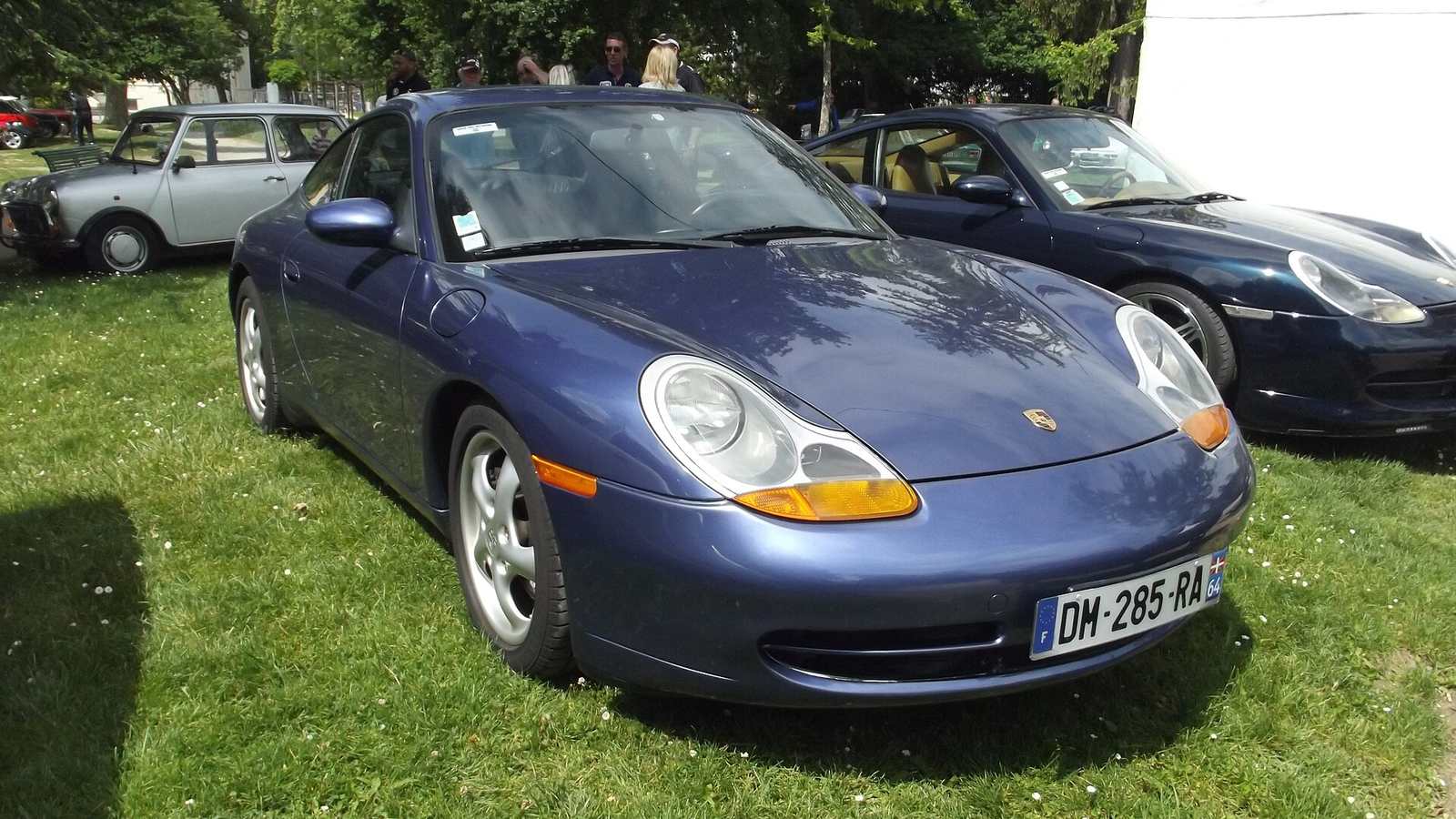
Porsche 911 (996)
1997–2005

- Years
- 1997–2005
- Engine
- 3.4 and 3.6 water-cooled flat-six; 3.6 turbo
- Power
- 300–483 PS
- Weight
- about 1,320–1,540 kg
The 996 was the first completely new 911: a new body, a new interior and a new water-cooled flat-six with four valves per cylinder. It was developed alongside the Boxster and shared that car's front structure, doors and much of its interior, an economy that helped rescue Porsche's finances in the 1990s. The integrated headlamps were not universally liked and were redesigned in 2001.
The Carrera started with a 3.4-litre engine and 300 PS, growing to 3.6 litres and 320 PS for the 2002 model year. It was lighter than the 993, stiffer and faster, with noticeably more cabin space.
The Turbo, GT3 and GT2 did not use the Carrera's engine. They had a dry-sump flat-six derived from Porsche's racing engines and commonly called the Mezger engine after its designer, Hans Mezger. The GT3, launched in 1999, began a line of track-focused 911s that continues today.
Variants
| Variant | Years | Notes |
|---|---|---|
| Carrera / Carrera 4 (3.4) | 1997–2001 | 300 PS. |
| Carrera / Carrera 4 / 4S (3.6) | 2001–2005 | 320 PS; 4S with the Turbo's wide body and brakes. |
| Turbo / Turbo S | 2000–2005 | 420 PS, 450 PS as the Turbo S; four-wheel drive. |
| GT3 / GT3 RS | 1999–2005 | 360 PS, later 381 PS; RS in 2003. |
| GT2 | 2001–2005 | Rear-drive turbo, 462 PS, later 483 PS. |
On a road trip
The 996 is the least expensive way into a 911 and one of the best to drive a long way. It is comfortable, reasonably narrow, light by modern standards and has hydraulic steering with real feel. A Carrera 4 or a Turbo makes a very capable all-weather touring car. Buy on condition and history, and the known engine issues below need not put you off.
What to check
- Intermediate shaft (IMS) bearing failure on Carrera engines, which can destroy the engine. Many cars have had an uprated bearing fitted, usually when the clutch is changed.
- Cylinder bore scoring, more often on 3.6-litre engines: look for a sooty left tailpipe, oil consumption and a ticking noise when warm. A borescope inspection is worthwhile.
- Rear main seal (RMS) oil leaks, a nuisance more than a danger.
- Cracked coolant expansion tanks, and front radiators and condensers clogged with leaves and corroded.
- On Turbo, GT3 and GT2 engines, coolant pipe fittings that are bonded in place and can work loose; many have been pinned or welded.