Mid-engined two-seat roadster
Porsche Carrera GT
2003–2006
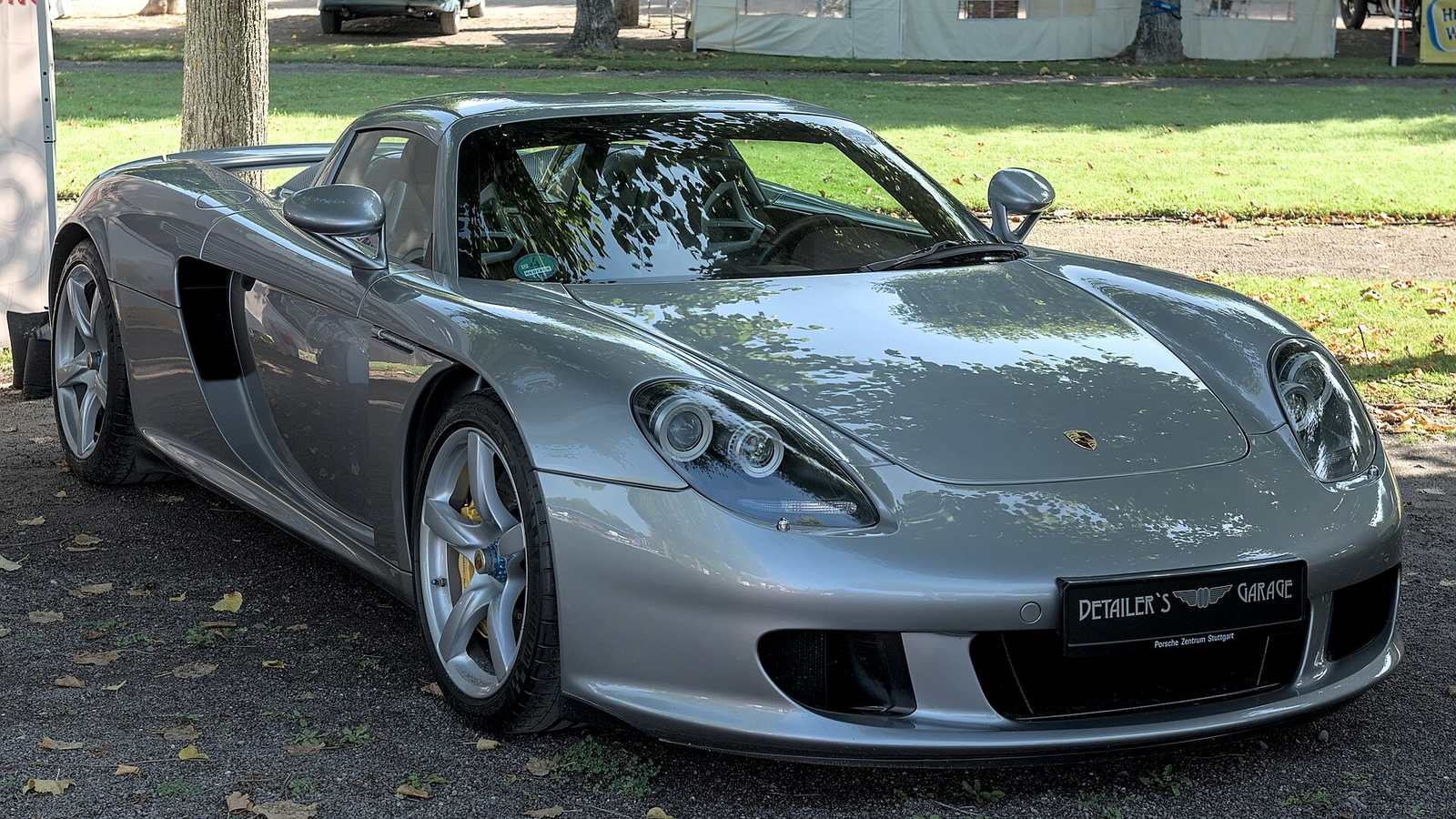

- Years
- 2003–2006
- Engine
- 5.7 naturally aspirated V10
- Power
- 612 PS
- Weight
- about 1,380 kg
The Carrera GT grew out of racing projects that never raced. Its V10 began as a Formula 1 design study in the early 1990s and was developed for a Le Mans prototype that Porsche cancelled before it competed. The engine was then enlarged to 5.7 litres and put into a road car, shown as a concept at the Paris motor show in 2000.
The production car had a carbon-fibre monocoque and a carbon engine subframe, pushrod suspension, ceramic brakes and a very small ceramic clutch. The gearbox was a six-speed manual and there was no stability control. It was assembled at Leipzig, and 1,270 were built against an original plan of 1,500.
It is widely regarded as one of the great analogue supercars, largely because of the engine, which revs to 8,400 rpm with an unmistakable wail, and partly because it demands skill from its driver.
Variants
| Variant | Years | Notes |
|---|---|---|
| Carrera GT | 2003–2006 | One specification; colours and interior trim varied. |
On a road trip
People do tour in them, and there is fitted luggage for the purpose, but this is a wide, low, valuable car with a sensitive clutch and no electronic safety net. It suits fast, open, well-surfaced roads far more than tight hairpins. Tyre age matters a great deal: old tyres are a known factor in accidents, and Porsche has approved modern replacements.
What to check
- Clutch wear, which is measured during servicing; replacement is very expensive.
- Service history from a dealer or specialist equipped for the car. Major services require the engine to come out.
- Recall status, including a campaign announced in 2023 concerning suspension joints. Check by VIN.
- Tyre age and type, and any history of accident damage to the carbon structure.