Porsche Track Day Modifications: What to Do First
The weak points worth fixing, the upgrades owners fit, the data systems that help you improve, and the engine conversions people really do.
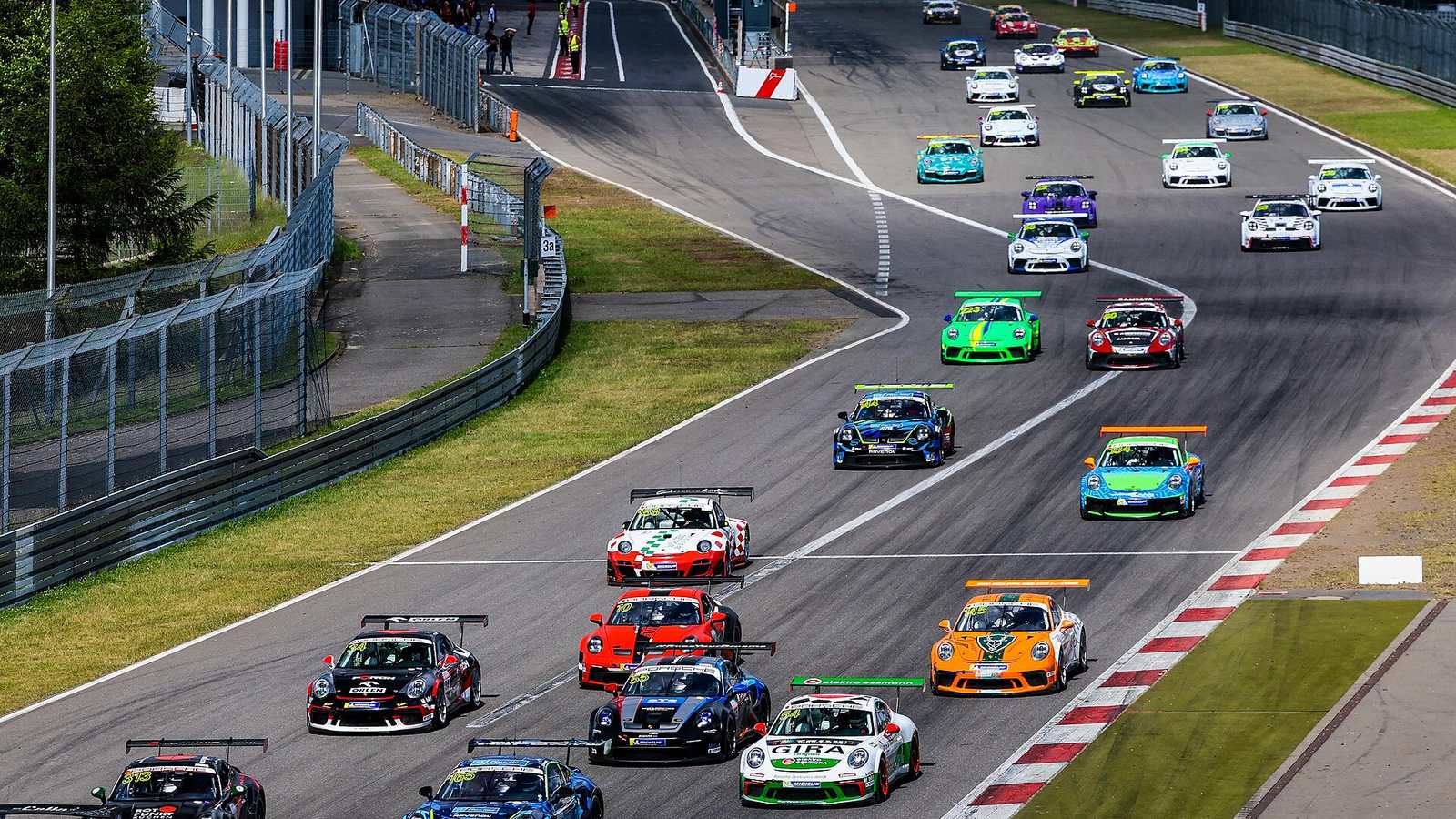

Most Porsches are capable track cars as delivered. The worthwhile changes are about reliability and consistency under sustained load, and about the driver, well before they are about power. This is roughly the order experienced owners tackle them in. Use a specialist who knows the model, and check what your insurer, your warranty and your local regulations allow.
1. Fluids, pads and a proper check-over
Start with high-temperature brake fluid, a pad suited to track use and fresh engine oil. Then put the car on a lift and look at everything: brake hoses, wheel bearings, suspension arms and bushes, driveshaft boots, radiators, undertray fixings and wheel bolts or centre-lock nuts, which must be torqued by the correct procedure. Many track day failures are simply old parts that nobody had looked at.
2. Brakes
- Iron discs. Standard discs and calipers are well matched to the cars. Track pads, fresh fluid and, on older cars, braided hoses are usually enough. Cracks spreading from the drilled holes are the wear limit to watch.
- Carbon-ceramic (PCCB). Very resistant to fade and light, but the discs are expensive and can wear quickly with heavy track use. Many owners who track regularly swap to an iron disc conversion for circuit days and keep the ceramics for the road.
- Cooling. GT3 brake ducts are a common fit on Carreras, Caymans and Boxsters of the same generation and are cheap.
3. Tyres and geometry
Tyres change the car more than any other single item. The Michelin Pilot Sport Cup 2 is the factory track tyre on GT models and is available in Porsche-approved versions for many others; alternatives are popular too. Keep to the front and rear sizes Porsche specifies, since the stability systems depend on the difference in rolling circumference.
Standard cars allow only modest negative camber at the front, so the outer shoulders wear quickly on track. Adjustable top mounts or GT3-type lower arms with shims fix that. A track alignment sharpens turn-in and saves tyres on a circuit; it will wear inner edges on the road, so many owners settle on a compromise.
4. Oil control and engine protection
Know which engine you have, because the weak points differ. The model guides give the detail.
- M96 and M97 engines (996 and first-generation 997 Carreras, 986 and early 987 Boxster and Cayman). These wet-sump engines can suffer oil starvation and aeration in long, fast corners on sticky tyres. Common measures are a deeper baffled sump, an uprated air-oil separator, a low-temperature thermostat and, for serious use, additional scavenge pumps for the cylinder heads. Deal with the intermediate shaft bearing before tracking the car. A third radiator, standard on S and some other models, is a simple addition.
- Mezger engines (996 and 997 GT3, GT2 and Turbo). Dry-sumped and very strong. The known weakness is the coolant pipe fittings, which are bonded into their housings and can come loose, dumping coolant on the track. The fix is to have them pinned or welded.
- Later direct-injection engines (second-generation 997 onward). Generally robust on track. Check for over-rev records before buying a manual car.
Whatever the engine, change the oil more often than the road schedule suggests and check the level between sessions.
5. Cooling
Clean the front radiators and condensers. Add the centre radiator if your model did not have one. PDK cars used hard in hot weather benefit from attention to gearbox cooling, and specialists offer upgrades for the models that need it. On air-cooled cars, an additional front oil cooler is the classic upgrade.
6. Suspension
Standard dampers are fine for occasional days. For more control, coilover kits from Bilstein, KW, Öhlins and others are common, and many are available with electronics that work with the factory PASM system. Replace tired bushes and engine mounts first: on a 911, a worn engine mount lets a great deal of weight move around.
7. Seats, harnesses and safety
- Fixed-back bucket seats transform how well you can drive the car. Porsche’s own carbon buckets are popular retrofits.
- Harnesses need a correctly designed harness bar or roll-over structure, as fitted to Clubsport-package cars. Do not attach shoulder straps to anything not intended for the load, and think about how seat, harness and airbags work together.
- Fit the towing eye before you go out. An extinguisher within reach is cheap.
8. Data: Porsche Track Precision, AiM and others
Porsche Track Precision is the factory answer. It is a smartphone app that works with the car’s Sport Chrono package on recent 911, 718 and other models, recording lap times, GPS position and vehicle data such as speed, braking and steering, with video from the phone. It needs no extra hardware beyond the optional factory preparation, and it is a good first step.
AiM equipment is common in club racing and among track day regulars. The Solo 2 DL is a GPS lap timer that plugs into the car’s diagnostic port or CAN bus to log engine and chassis data, and the SmartyCam overlays that data on video. Full dash loggers such as the MXS are mainly fitted to dedicated track and race cars, where they replace the instruments. Analysis is done in AiM’s Race Studio software.
Other popular options include the VBOX range from Racelogic and the Garmin Catalyst, which coaches as you drive. Before you buy:
- Check exactly which data channels are available for your model and year. It varies.
- Oil temperature and pressure are the numbers that protect an engine. Make sure you can see them.
- Data only helps if you look at it. One session comparing your braking points with an instructor’s is worth more than a season of recordings.
9. Engine conversions
Engine swaps are less common in the Porsche world than in some others, but several are well established.
- Larger M96 and M97 engines. A 986 Boxster or 987 Cayman can take a 3.4, 3.6 or 3.8 from a 911 of the same family with relatively few changes. Rebuilt engines with new liners, enlarged to 3.7, 3.9 litres or more, are also a common response to bore scoring.
- Air-cooled upgrades. Fitting a 3.2 or 3.6 into an earlier 911 has been done for decades. A 3.6 from a 964 or 993 in a G-series car is a well-documented conversion. The 914 has long been a candidate for six-cylinder conversions.
- Subaru engines in the 914 and other air-cooled cars, where originality is not the priority.
- V8 conversions exist for the 944, 986 and 996, mostly in North America. They are a matter of taste.
Before you commit, check emissions and registration rules where you live, tell your insurer, and think about value. On air-cooled cars in particular, originality is worth a great deal.
10. Noise
Circuits enforce noise limits, commonly a static test and drive-by meters. Sports exhausts, and GT3s in particular, can be close to or over the limit on quiet days. Know your car’s reading before you travel, and keep the exhaust valves closed if that is what it takes.
Where to use it
The events page lists the one-make series and club racing programmes, and the communities page lists the clubs that run Porsche-only track days and the forums where every one of these modifications has been discussed at length.