Mid-engined two-seat roadster and coupé
Porsche Boxster and Cayman (986 and 987)
1996–2012
.jpg)
- Years
- 1996–2012
- Engine
- 2.5 to 3.4 water-cooled flat-six
- Power
- 204–330 PS
- Weight
- about 1,250–1,400 kg
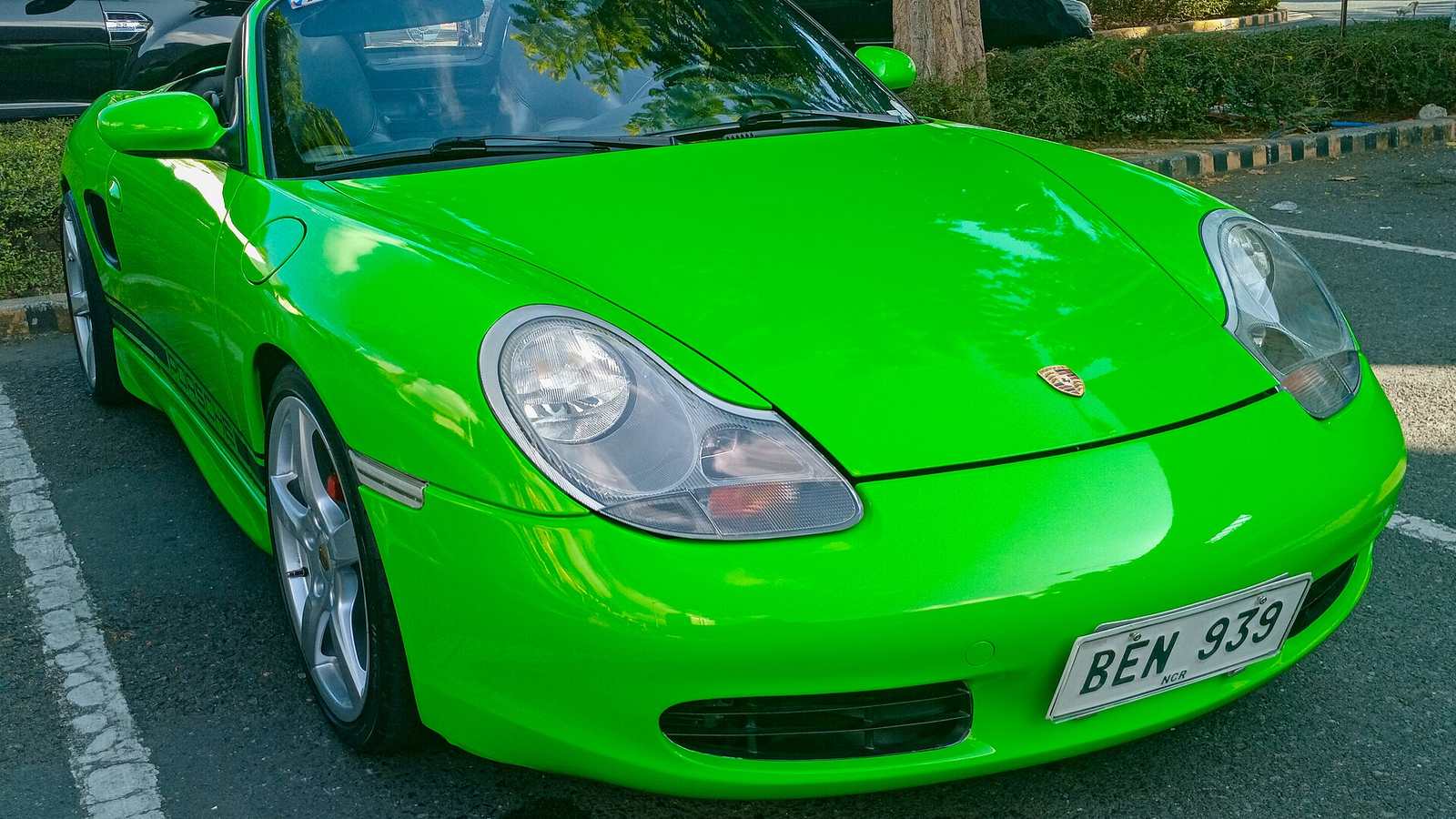
The Boxster began as a concept car, designed by Grant Larson, at the 1993 Detroit motor show. The production 986 followed in 1996 with a 2.5-litre flat-six mounted ahead of the rear axle. It shared a large part of its structure and components with the 996, and between them the two cars turned Porsche's fortunes around. Many were assembled under contract by Valmet in Finland.
The engine grew to 2.7 litres, and the Boxster S of 1999 had a 3.2 with 252 PS and a six-speed gearbox. The 987 replaced it for 2005 with a better interior and stiffer body, and later that year the Cayman S coupé was added with a 3.4-litre engine and 295 PS.
The second-generation 987, from 2009, received new engines without an intermediate shaft, direct injection on the S models and the PDK gearbox. The lightweight Boxster Spyder and Cayman R ended the line.
Variants
| Variant | Years | Notes |
|---|---|---|
| Boxster 2.5 / 2.7 (986) | 1996–2004 | 204 PS, then 220 to 228 PS. |
| Boxster S (986) | 1999–2004 | 3.2 litres, 252 to 260 PS. |
| Boxster / Boxster S (987) | 2004–2012 | 2.7 to 3.4 litres, 240 to 310 PS. |
| Cayman / Cayman S (987) | 2005–2012 | 2.7 to 3.4 litres, 245 to 320 PS. |
| Boxster Spyder / Cayman R | 2010–2012 | Lightened, 320 and 330 PS. |
On a road trip
A mid-engined Porsche with two boots is close to ideal for a mountain tour. These cars are narrower than a modern 911, balanced, forgiving and light on tyres and brakes, and a Boxster lets you drive a pass with the roof down. They are also inexpensive to buy. Budget for the preventive work below and you have one of the best-value driver's cars there is.
What to check
- IMS bearing failure on 986 and first-generation 987 engines; ask what has been fitted and when.
- Bore scoring on 3.4-litre first-generation 987 S engines.
- Rear main seal leaks, a failing air-oil separator (clouds of white smoke) and cracked coolant tanks.
- Blocked body drains on the Boxster, which let water into the cabin and onto the electronics under the seats.
- Hood mechanism, rear window condition on early plastic-window cars, and worn suspension arms.