Front-engined, rear-transaxle 2+2 coupé and cabriolet
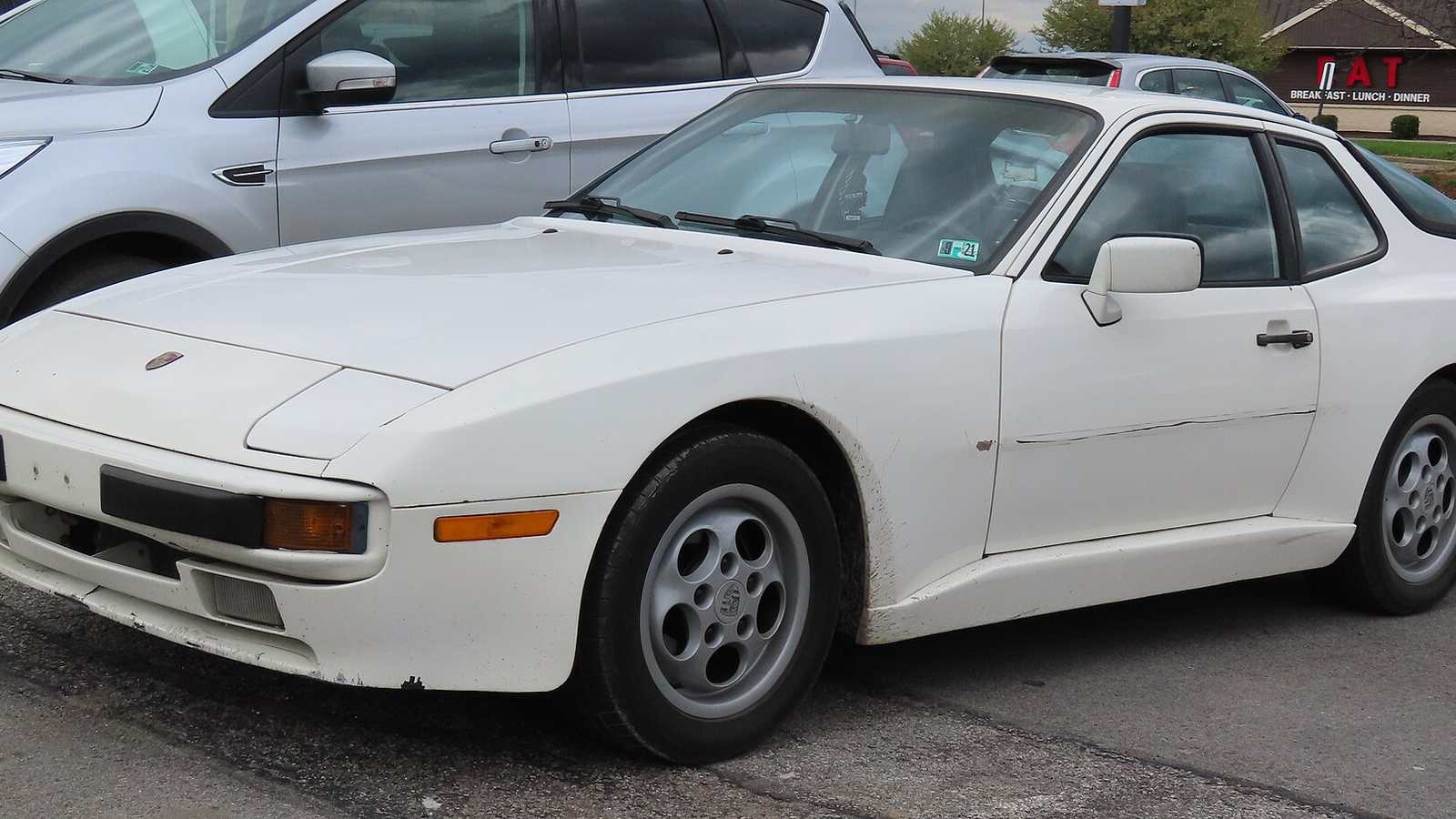
Porsche 924, 944 and 968
1976–1995

- Years
- 1976–1995
- Engine
- 2.0 to 3.0 water-cooled inline-four, some turbocharged
- Power
- 125–250 PS
- Weight
- about 1,080–1,400 kg
The 924 started as a design Porsche carried out for Volkswagen. When Volkswagen cancelled it, Porsche bought the project back and launched the car in 1976. The engine was at the front, water-cooled, and the gearbox was at the back in unit with the differential, giving close to even weight distribution. It was built for Porsche by Audi at Neckarsulm.
The 944 of 1982 used the same layout with wider bodywork and a Porsche-designed 2.5-litre four, with balance shafts to keep it smooth. It was a great commercial success. The 944 Turbo produced 220 PS and later 250 PS, and the 3.0-litre S2 was one of the largest four-cylinder engines in production.
The 968 was the final development, built at Zuffenhausen from 1991 with a 240 PS 3.0, variable valve timing and a six-speed gearbox. The stripped-out Club Sport is the driver's choice. The same family of ideas produced the V8-engined 928, a grand tourer sold from 1977 to 1995.
Variants
| Variant | Years | Notes |
|---|---|---|
| 924 / 924 Turbo / 924 S | 1976–1988 | 125 PS 2.0; 170 PS Turbo; 924 S with the 944's engine. |
| 944 / 944 S | 1982–1989 | 2.5 litres, 163 PS; 190 PS 16-valve S. |
| 944 Turbo | 1985–1991 | 220 PS, then 250 PS. |
| 944 S2 | 1989–1991 | 3.0 litres, 211 PS, coupé and cabriolet. |
| 968 / 968 Club Sport | 1991–1995 | 240 PS, six-speed; Club Sport lightened. |
On a road trip
These are excellent touring cars and still modestly priced. The balance is neutral, the hatchback takes real luggage, the cabin is comfortable and fuel range is good. On a fast, flowing road such as the Route Napoléon a 944 S2 or 968 is in its element. On very tight hairpins the long nose and gearing make it feel less at home than a rear-engined car.
What to check
- Timing belt and balance shaft belt changes, with the water pump, at the correct intervals. A failed belt wrecks the engine.
- Clutch replacement is labour-intensive because of the torque tube and rear gearbox.
- Sill and rear suspension mount corrosion on later cars, and general rust on the 924.
- Power steering leaks, cracked dashboards and tired engine mounts.
- On the 968, wear in the variable valve timing chain and its pads.