Electric four-door saloon, Sport Turismo and Cross Turismo
Porsche Taycan
2019–present

- Years
- 2019–present
- Engine
- One or two electric motors, 800-volt battery system
- Power
- about 408–1,108 PS (peak, by model)
- Weight
- about 2,090–2,400 kg
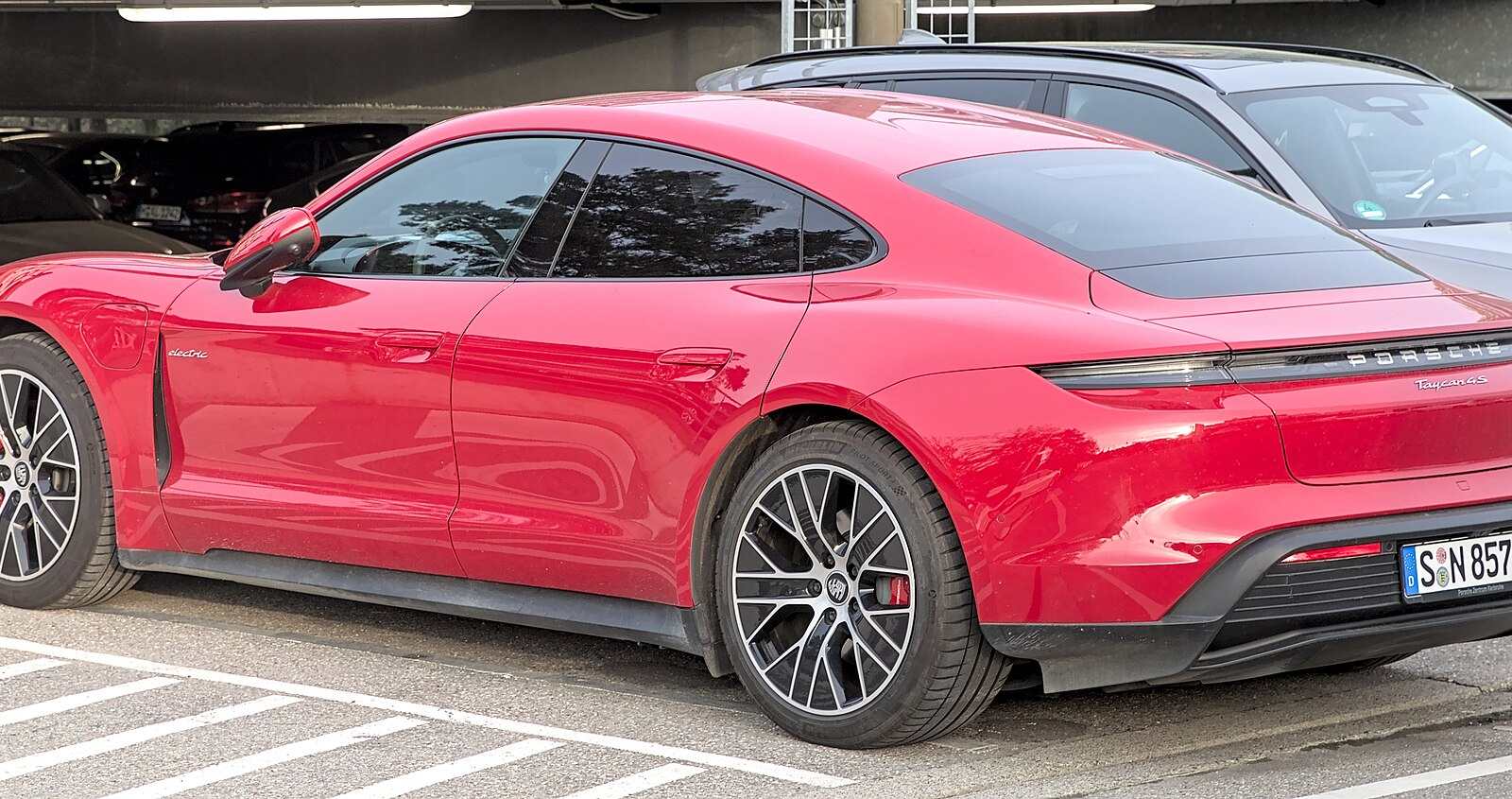
The Taycan was Porsche's first series-production electric car, previewed by the Mission E concept of 2015 and built at Zuffenhausen from 2019. It uses an 800-volt electrical system, which allows very fast DC charging, and a two-speed gearbox on the rear axle to combine strong acceleration with efficiency at speed.
The range runs from a single-motor rear-drive car to the Turbo S, and from 2024 the Turbo GT, which with its Weissach package produces up to 1,108 PS for short periods. The Cross Turismo and Sport Turismo estate bodies were added from 2021. The names Turbo and Turbo S are used as badges of rank; there are no turbochargers.
A substantial update in 2024 brought more power, more range, faster charging and lower weight. On the road the Taycan is notable for the quality of its steering and body control, which are recognisably Porsche despite the mass.
Variants
| Variant | Years | Notes |
|---|---|---|
| Taycan (rear-drive) | 2021–present | Single motor, the longest-range version. |
| Taycan 4 / 4S / GTS | 2019–present | Dual motor, four-wheel drive. |
| Turbo / Turbo S | 2019–present | Up to 761 PS before the 2024 update, more after it. |
| Turbo GT | 2024–present | Up to 1,108 PS with the Weissach package. |
| Cross Turismo / Sport Turismo | 2021–present | Estate bodies; Cross Turismo with raised suspension. |
On a road trip
A Taycan makes a very good mountain car with some planning. Electric motors lose nothing at altitude, and long descents recover energy instead of heating the brakes. Climbing uses a great deal of energy, so range on a day of passes is well below the official figure, and rapid chargers are found in valley towns, not on the cols. It is wide and heavy, which shows on narrow, rough roads. Plan charging stops around lunch and overnight stays.
What to check
- High-voltage battery recalls, which have affected a large number of 2020 to 2024 cars. Check by VIN that inspections and any module replacements are complete.
- Software level on early cars, which had a number of updates and a recall relating to loss of drive power.
- Heater and charging hardware faults reported by owners of early cars.
- Tyre wear, which is heavy, and brake discs corroded through lack of use.